India’s food safety regulator has proposed allowing some recycled plastic in food packaging. On 3 November 2026, the Food Safety and Standards Authority of India (FSSAI) published draft amendments to its packaging regulations, with conditions on how the plastic is recycled and where it sits in a pack.
Headlines such as “recycled plastic for food packaging” can sound like a free pass. It is not. This guide explains what the FSSAI recycled plastic draft actually proposes, what stays the same for now, and what hotels, sweet shops, bakeries and food makers in Madurai and across Tamil Nadu should ask their packaging suppliers.
What’s in this guide
What the FSSAI Draft on Recycled Plastic in Food Packaging Says
The draft Food Safety and Standards (Packaging) Amendment Regulations, 2026 would amend the 2018 packaging regulations. According to a summary by Corpseed and a report by UNI, it adds two new routes for recycled plastic:
| Route | Material | Main condition |
|---|---|---|
| Chemically recycled PE and PP | Polyethylene and polypropylene made again from recovered monomers | Must be made by the monomer route under IS 14534 and be equivalent to virgin material |
| Recycled outer layer | Recycled polymer in the outermost layer of multilayer packs | Must come only from food-grade packaging, with inner layers acting as a barrier and meeting migration limits |
What the Draft Does Not Allow
The draft is narrow. It does not allow ordinary recycled plastic – the kind made by washing and remelting mixed waste – to touch food directly. Mechanically recycled PE and PP for direct food contact are not covered, and neither is every chemical recycling method.
In addition, these are proposals, not final rules. FSSAI has invited objections and suggestions for 60 days, and the existing packaging rules continue to apply until a final notification. India already allows recycled PET only through processes approved under separate FSSAI guidelines.
- Still not allowed: recycled plastic of unknown origin in direct contact with food.
- Still not allowed: carry bags or covers made from mixed plastic waste for ready-to-eat food.
- Unchanged: overall and specific migration limits for all plastic food-contact materials.
Why Recycled Plastic in Food Packaging Raises Questions
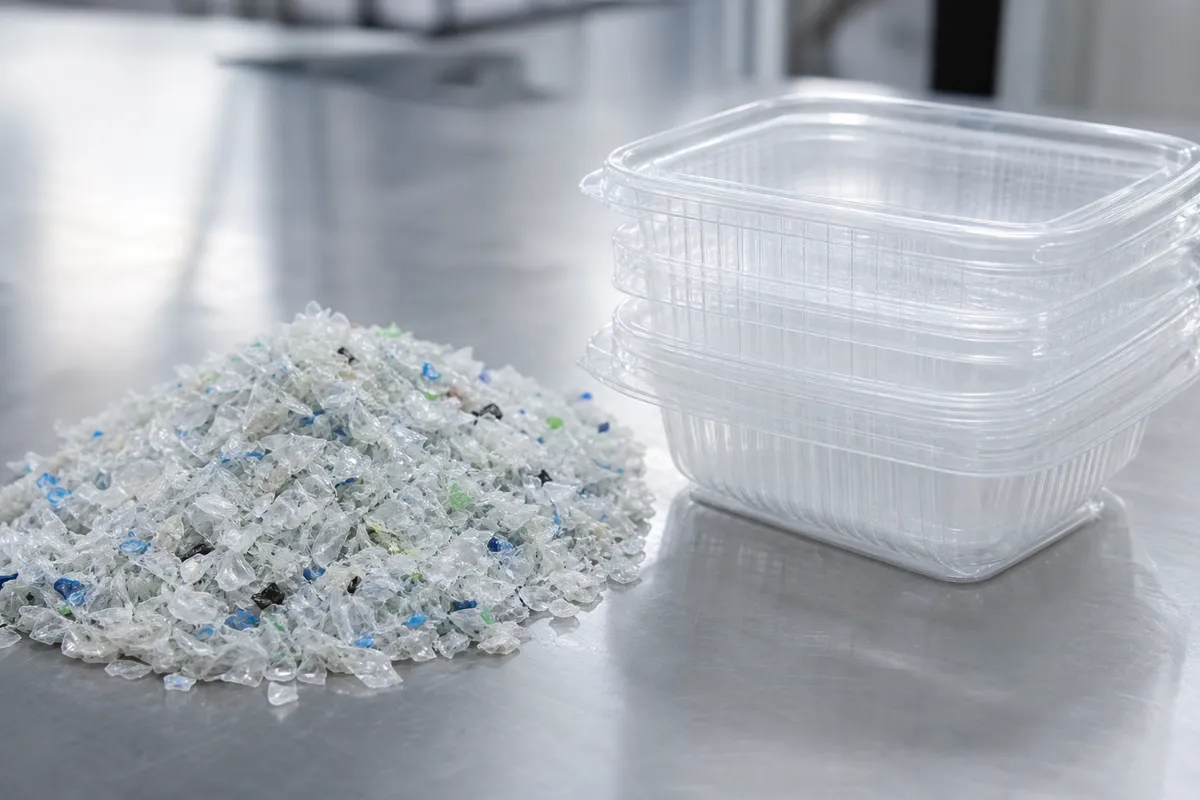
Recycled plastic can carry traces of earlier use. Post-consumer plastic contains thousands of additives, and much of India’s recycling happens in the informal sector, where the source of the waste is hard to track, as Down To Earth has pointed out.
That is why the draft insists on monomer-route recycling for direct contact, and on food-grade origin plus a barrier for the outer layer. For a food business, the practical lesson is simple: the material inside your container matters as much as its shape and price.
Recycled Plastic in Food Packaging: What Food Businesses in Tamil Nadu Should Do
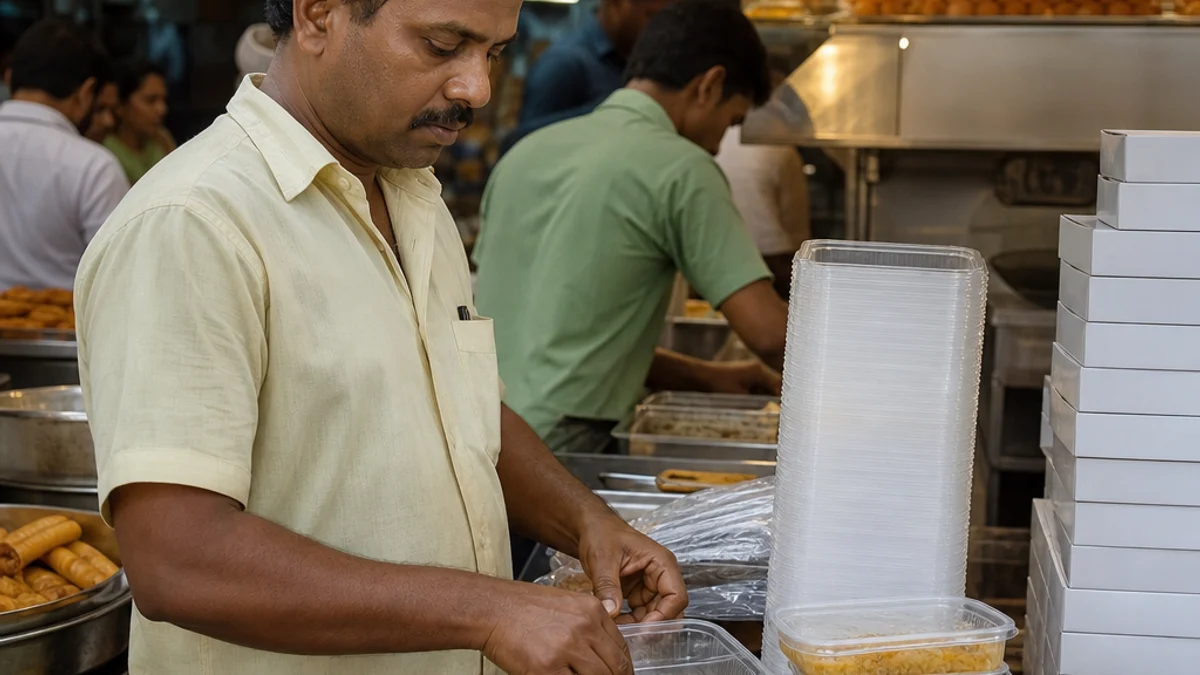
Nothing changes at your counter overnight. However, this is a good time to check what your parcel containers, sweet boxes and pouches are made of, so you are ready whatever the final rule says.
- Ask your supplier in writing which polymer each container is made of – for example PP, PET or PE.
- Ask whether the container contains any recycled material, and if so, which process and FSSAI route it follows.
- Keep the supplier’s food-contact or migration test details on file for food safety inspections.
- Use containers only for what they are made for – for example, check the temperature range before packing hot sambar or biryani.
- Keep following the Tamil Nadu plastic ban: no single-use carry bags, plastic cups or plastic coated plates.
- Watch for the final FSSAI notification after the 60-day comment period.
Products Mentioned in This Guide
Frequently Asked Questions
Has FSSAI allowed recycled plastic in food packaging?
Not yet. FSSAI published draft amendments on 3 November 2026 that would allow chemically recycled PE and PP made by the monomer route, and recycled polymer in the outer layer of multilayer packs, under strict conditions. These are proposals open for comments for 60 days.
Can recycled plastic touch food under the draft?
Only chemically recycled PE and PP made through the monomer route and equivalent to virgin material. Mechanically recycled PE and PP are not covered for direct food contact.
What is the monomer route?
It is a chemical recycling method that breaks plastic back into its basic building blocks, called monomers, which are then made into new plastic. Ordinary mechanical recycling only washes, melts and re-pellets the plastic.
What should restaurants ask their container supplier?
Ask which polymer each container is made of, whether it contains recycled material, and for food-contact or migration test details. Keep the answers on file in case of an inspection.
Food Containers from Madurai
Weorex Packing supplies food containers, PET boxes and paper cups from Madurai, with door delivery or pickup in the city and lorry transport across Tamil Nadu. Ask us for the material details of any product before you order. This guide is general information, not legal advice – always follow the final FSSAI notification.