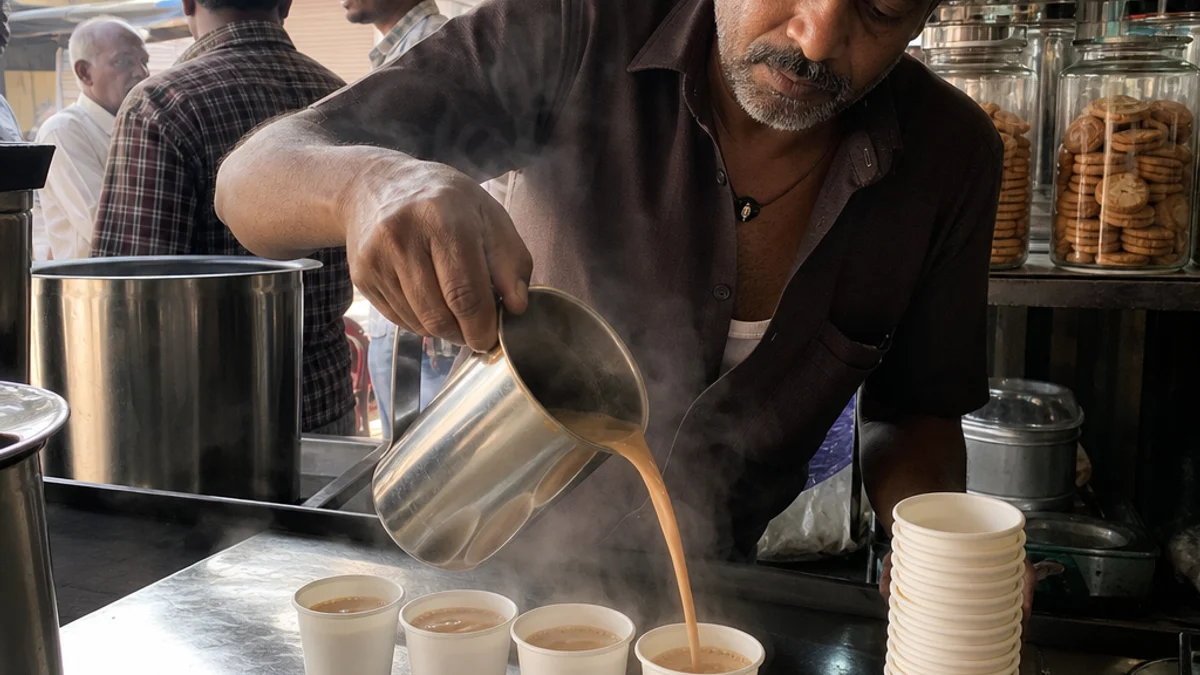
Almost every tea shop, bakery and office in Madurai serves tea and coffee in paper cups. Yet many owners still ask the same question: are PE coated paper cups allowed in Tamil Nadu? The answer matters, because the state’s plastic ban names “plastic coated paper cups” as a banned item, and the Supreme Court upheld that ban in October 2023.
This guide explains what a PE coated paper cup is, what the Tamil Nadu and Kerala rules say, and why many tea shops, cafés and caterers are switching to aqueous coated paper cups. It also gives a simple checklist before you place your next cup order.
What’s in this guide
What Is a PE Coated Paper Cup?

A paper cup cannot hold hot tea on paperboard alone – the liquid would soak through in seconds. Therefore, manufacturers add a thin waterproof layer on the inside. In a PE coated paper cup, that layer is a film of polyethylene (PE), a common plastic.
An aqueous coated paper cup uses a water-based barrier coating instead of a PE film. Because both look almost the same from the outside, the only reliable way to know is to ask your supplier which coating the cup uses.
| Point | PE coated paper cup | Aqueous (water-based) coated paper cup |
|---|---|---|
| Inner layer | Thin polyethylene (plastic) film | Water-based barrier coating |
| Look and feel | Smooth, slightly glossy inside | Similar look; often a matte inside |
| Cost | Usually the lowest | Usually slightly higher |
| Tamil Nadu rule to check | “Plastic coated paper cups” are on the banned list | Not a plastic film coating – confirm the coating details with your supplier |
Are PE Coated Paper Cups Banned in Tamil Nadu?
Tamil Nadu’s ban on one-time use and throwaway plastics, in force since 1 January 2019, lists plastic coated paper cups and plastic coated paper plates among the banned items, alongside plastic tea cups and thermocol cups. In other words, a PE coated paper cup falls under the description of a plastic coated paper cup.
The paper cup industry challenged the ban. However, on 20 October 2023 the Supreme Court refused to interfere with the Madras High Court’s order and upheld the ban on these “reinforced” paper cups, according to LiveLaw and Outlook. The court said the ban had a scientific basis and was a reasonable policy decision in the public interest.
Kerala and Other States
Tamil Nadu is not alone. Kerala’s single-use plastic order also covers plastic coated paper cups, plates, bowls and bags. In addition, the Rajasthan High Court ruled in 2023 that plastic-laminated paper items fall within the central single-use plastic notification of August 2021, even when the notification does not name them directly.
Enforcement varies from district to district, and many shops still use PE coated paper cups. Even so, the rules are clear, so food safety and pollution control teams can act during inspections.
Why PE Coated Paper Cups Face Scrutiny
Two concerns drive the rules. First, the thin PE film is hard to separate from the paper, so the cups are difficult to recycle. Second, a 2021 study by researchers at IIT Kharagpur, published in the Journal of Hazardous Materials, found that a paper cup holding hot liquid for 15 minutes released about 25,000 tiny plastic particles from its lining into 100 ml.
Some social media posts go further and link paper cups directly to cancer. However, fact-checkers have rated those claims as only partly true, so stick to the facts: the concern is plastic in the lining, not paper itself.
Switching from PE Coated Paper Cups to Aqueous Coated Cups
For tea shops, cafés, offices and caterers in Tamil Nadu, the practical step is to stop buying PE coated paper cups and ask for aqueous (water-based) coated cups instead. They work the same way at the counter – for hot tea, filter coffee, milk and cold drinks.
- Ask your supplier in writing which coating each cup uses – PE or aqueous.
- Order samples and test them with your hottest tea and coffee for the time customers usually take to drink.
- Keep the supplier’s coating details on file in case an inspector asks.
- Choose the right wall type: single wall for tea, ripple or double wall for hot coffee without a sleeve.
- Use up old PE stock carefully and do not reorder it for shops in Tamil Nadu or Kerala.
- Check the latest Tamil Nadu Pollution Control Board notices, as rules and guidance can change.
Products Mentioned in This Guide
Frequently Asked Questions
Are PE coated paper cups banned in Tamil Nadu?
Tamil Nadu’s plastic ban, in force since 1 January 2019, lists plastic coated paper cups as a banned item, and a PE coated paper cup has a plastic (polyethylene) coating. The Supreme Court upheld the ban on these reinforced paper cups on 20 October 2023.
What is the difference between PE coated and aqueous coated paper cups?
A PE coated paper cup has a thin polyethylene film inside. An aqueous coated paper cup uses a water-based barrier coating instead of a PE film. Ask your supplier to confirm the coating in writing.
Are aqueous coated paper cups allowed in Tamil Nadu?
Aqueous cups do not use a PE film, which is why many shops switch to them. Coatings differ between makers, so keep the supplier’s coating details and follow the latest Tamil Nadu Pollution Control Board guidance.
Do paper cups release microplastics?
A 2021 IIT Kharagpur study found that a plastic-lined paper cup holding hot liquid for 15 minutes released about 25,000 microplastic particles into 100 ml. The particles came from the plastic lining.
Aqueous Coated Paper Cups from Madurai
Weorex Packing supplies single wall, ripple wall and double wall paper cups with an aqueous (water-based) coating option, from 4 oz to 16 oz, with door delivery or pickup in Madurai and lorry transport across Tamil Nadu. Choose the Aqueous option on each product page. This guide is general information, not legal advice – always follow the latest government notices.